
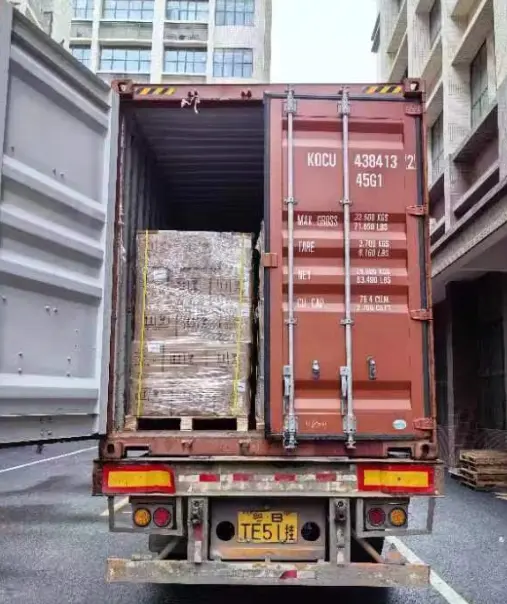
Shipping Glass Bottles & Jars from China: The Complete 2026 Freight & Logistics Guide
Getting glass packaging from a Chinese factory to your warehouse is where many first-time importers lose money. Not on the product — on avoidable breakage, wrong Incoterms, surprise destination charges, and uninsured damage claims.
After you’ve compared unit prices and MOQs, shipping is the next 20–40% of your landed cost — and the single biggest source of risk, because glass is the only cargo class where poor packaging can destroy your entire order before it reaches port.
Quick answer: Ship sea freight (FCL once your order exceeds ~13 CBM, LCL below that), insist on 4-layer export packaging with cell dividers, buy all-risk insurance at 0.2–0.5% of cargo value, and buy FOB from your manufacturer if it’s your first order. Properly packed glass in a full container breaks at 0.3–0.5% — substandard packing can push that past 5%, which on a 20,000-unit order is 1,000 destroyed jars.
This guide breaks down every decision in the shipping chain — based on Daystar Glassware’s experience exporting glass containers to 50+ countries from Shenzhen.
Why Glass Shipping Is Different From Other Cargo
Most importers treat freight as a generic cost line. Glass punishes that thinking, because it combines three cargo characteristics that rarely appear together:
| Characteristic | What It Means for Shipping |
|---|---|
| Fragility | Impacts, drops, and vibration crack glass. General cargo survives rough handling; glass doesn’t. Packaging quality matters more than carrier choice. |
| High density (weight) | Glass runs 2.2–2.5 g/cm³. A full carton of candle jars weighs far more than a carton of plastic containers of the same size — you hit weight limits before you fill container volume. |
| Low value density | Unit values of $0.35–$1.80 mean air freight often costs more than the product itself. This forces sea freight, which lengthens the cash-conversion cycle. |
| Decorated surfaces | Spray coating, electroplating, and frosting — covered in our glass decoration comparison — scratch during transit if jars contact each other. Partition protection protects finish, not just structure. |
The practical consequence: your factory’s export packaging standard matters as much as the freight rate you negotiate. A $300 saving on freight means nothing if it costs you $2,000 in breakage.
Export Packaging: The 4-Layer System That Prevents 95% of Breakage
Professional glass exporters use a standardized four-layer packaging system. When vetting suppliers with our 10-point manufacturer checklist, ask specifically what their standard export packing includes — factories that can’t answer in detail are a red flag.
| Layer | Specification | What It Prevents |
|---|---|---|
| 1. Cell dividers | Corrugated or honeycomb paperboard partitions inside each box — one cell per unit | Unit-to-unit contact, scratching, impact transfer between jars |
| 2. Inner box | 3-ply corrugated box, 6–24 units per box depending on size | Local shock distribution; keeps individual units immobilized |
| 3. Master carton | 5-ply corrugated, edge-crush tested (ECT-32 or higher), typically 40–60 cm per side | Stacking compression — master cartons in a container stack 6–8 high |
| 4. Palletization | Standard export pallet (1.1 × 1.1 m or 1.2 × 1.0 m), stretch-wrapped, corner boards, “FRAGILE / THIS SIDE UP” marks | Forklift damage, shifting during ocean transit, moisture ingress |
Two additional standards separate serious exporters from casual ones:
- Drop and vibration testing: Export packaging should be validated against ISTA 3A (or equivalent) — a standard sequence of drops, vibration, and compression tests simulating the full parcel and pallet environment.
- Desiccants and moisture control: Ocean containers experience condensation (“container rain”). Silica gel packs and kraft paper lining protect decorated surfaces — especially electroplated and frosted finishes — from water staining.
Realistic Breakage Rates (And What “Acceptable” Means)
Every buyer asks “what percentage will break?” — and most factories answer too optimistically. Here are the honest ranges based on actual export experience:
| Scenario | Typical Breakage Rate | Comment |
|---|---|---|
| FCL, 4-layer packaging, palletized | 0.3–0.5% | Industry benchmark; claim-worthy damage above this |
| FCL, standard packaging, no dividers | 1–2% | Common with low-end suppliers; unacceptable for premium products |
| LCL, professional packaging | 1–2% | Extra handling at consolidation warehouse adds risk |
| LCL, substandard packaging | 2–5% | Consolidation involves 3+ extra touch points; poor packing fails here |
| Air freight, professional packaging | 0.5–1.5% | Less transit vibration but more handling per hour |
Build a 1% breakage allowance into your inventory plan for first orders, then adjust based on your actual claims data. Note that in-house quality failures (cracks from poor annealing) look identical to transit breakage — which is why thermal shock testing before shipment matters: it catches structural defects while the goods are still at the factory, where replacement is cheap.
Freight Modes Compared: Air, Express, Rail, Sea LCL, Sea FCL
Five realistic options exist for shipping glass from China. Here is how they compare on the metrics that matter:
| Mode | 2026 Cost Reference | Transit (Shenzhen origin) | Breakage Risk | Best For |
|---|---|---|---|---|
| Sea FCL (full container) | $3,500–$6,500 per 40ft to US West Coast; $2,800–$5,000 to North Europe | 14–25 days USWC; 25–35 USEC; 28–40 days EU | Lowest — sealed door-to-door, zero re-handling | Production runs over ~13 CBM; virtually all volume orders |
| Sea LCL (shared container) | $30–$95 per CBM to US; $20–$75 per CBM to EU, 1 CBM minimum | 25–45 days (consolidation adds 1–2 weeks vs FCL) | Medium — extra handling at both consolidation warehouses | First orders, samples-by-sea, 2–13 CBM volumes |
| Rail (China–Europe) | Mid-range; competitive to EU when sea rates spike | 15–25 days to EU hub cities | Low-medium | EU buyers wanting faster than sea, cheaper than air |
| Air freight | $4–$12 per kg | 5–10 days | Medium — dense handling, but strong packaging standards | Urgent restocks, high-value items only |
| Express courier | $10–$15 per kg | 3–7 days | Low for small parcels | Samples, pre-production prototypes |
The LCL/FCL break-even point is 13–15 CBM. Below that, LCL’s per-CBM pricing wins. Above it, a dedicated container is cheaper per unit and safer — LCL destination handling charges (CFS fees of $50–$120 per shipment) and per-CBM minimums erode the apparent saving quickly. Because glass is dense, many buyers hit the volume break-even before the weight break-even: a 20ft container maxes out at roughly 21–22 tons of payload, and heavily-walled jars can reach that at 20–24 CBM.
How Much Glass Fits in a Container
Container capacity determines whether FCL makes sense for your order volume. Reference figures for boxed, palletized product (typical packing efficiency of 85–90% of container volume):
| Container | Usable Volume | Payload Limit | Candle Jars (3–10 oz) | Diffuser/Perfume Bottles (50–200 ml) |
|---|---|---|---|---|
| 20ft GP | ~28 CBM | ~21,700 kg | 40,000–80,000 pcs | 100,000–250,000 pcs |
| 40ft GP | ~58 CBM | ~26,700 kg | 80,000–160,000 pcs | 200,000–500,000 pcs |
| 40ft HC | ~68 CBM | ~26,500 kg | 95,000–190,000 pcs | 240,000–600,000 pcs |
Heavy-wall containers hit the weight limit first; thin-wall fragrance bottles almost always cube out before weighing out. Ask your manufacturer for the exact boxed dimensions and gross weight per master carton — then any freight forwarder can compute your per-unit freight in minutes.
Per-unit freight math (real example): 5,000 candle jars at 9 CBM total. By LCL at $60/CBM plus destination charges: roughly $1,100–$1,400, or $0.22–$0.28 per jar. By air at 2,250 kg × $5/kg: $11,250, or $2.25 per jar — more than the jar itself costs. This is why production glass ships by sea, and only genuine emergencies fly.
2026 Freight Cost Benchmarks from China
Spot rates stabilized in 2026 after the 2024–2025 volatility, but seasonal and geopolitical swings remain. Planning ranges (spot market, including base surcharges):
| Lane (Shenzhen origin) | 40ft FCL Range | LCL per CBM |
|---|---|---|
| US West Coast (LA/Long Beach) | $3,500–$6,500 | $30–$95 |
| US East Coast (New York) | $5,200–$8,100 | $45–$110 |
| North Europe (Rotterdam/Hamburg) | $2,800–$5,000 | $20–$75 |
| UK (Felixstowe) | $3,000–$5,500 | $30–$80 |
| Australia (Sydney/Melbourne) | $1,500–$3,000 | $25–$60 |
Budget at the top of the range if you ship July–October (peak season), and treat any quote below the bottom of the range as worth double-checking for excluded destination charges. On top of base ocean freight, expect:
- BAF (bunker/fuel surcharge): $200–$500 per container
- Peak season surcharge: $200–$1,000 per container, August–November
- EU carbon (ETS) surcharge: $100–$300 per container on Europe lanes
- Origin THC + documentation: $250–$450 per container
- Destination THC, drayage, brokerage: $550–$1,100 per container to the US
The trap most first-timers miss: demurrage and detention. Once a container lands, you typically get 3–5 free days at the terminal and 4–7 free days with the container. Beyond that: $75–$200/day demurrage plus $100–$250/day detention. A container that sits two weeks can rack up $2,500–$4,000 — more than many orders’ entire freight budget. File customs documents before the vessel arrives and book trucking in advance.
Incoterms for Glass Buyers: EXW vs FOB vs CIF vs DDP
Incoterms define who pays for what, who bears risk at each stage, and who controls the carrier. For glass specifically, control matters because packaging and loading quality directly determine breakage:
| Incoterm | You Pay For | Risk Transfers To You | Carrier Control | Best For |
|---|---|---|---|---|
| EXW (Ex Works) | Everything from factory gate onward | At the factory door | You (via your forwarder) | Experienced importers with a China-side agent |
| FOB (Free On Board) | Ocean freight, insurance, destination charges | Once loaded on the vessel | You choose the forwarder | Most first-time and mid-size buyers |
| CIF (Cost, Insurance, Freight) | Destination charges, duties, onward delivery | At destination port discharge | Manufacturer chooses carrier & insurer | Buyers wanting simplicity; weakens freight control |
| DDP (Delivered Duty Paid) | Only final delivery to your door | At your warehouse | Manufacturer/seller side | Small first orders, e-commerce test batches |
Our recommendation for first orders: FOB. The manufacturer handles export packaging, customs declaration, and loading — the steps where their local expertise protects your glass — while you control ocean freight through your own forwarder at rates you can benchmark. CIF looks convenient but hides the insurance terms and often routes your glass on the cheapest, roughest carrier available. Whatever you choose, specify the Incoterm, named port, and packaging standard explicitly in your purchase agreement.
Customs, HS Codes & Duties for Glass Packaging
Glass containers for packaging are classified in HS heading 7013. The subheading determines your duty rate, so classify correctly before your first shipment:
| HS Code | Typical Products |
|---|---|
| 7013.49 | Glass tableware/household articles — frequently applied to candle jars |
| 7013.70 | Glassware for toilet/office/indoor decoration — commonly perfume and diffuser bottles |
| 7013.99 | Other glass containers not elsewhere specified |
Three cautions for 2026:
- US imports from China carry stacked duties — the MFN base rate for your HTS code plus additional layered tariffs introduced since 2025. Total effective rates for many consumer goods categories run well above the base rate. Get a binding classification and current duty stack from your customs broker before committing to volume; never budget off last year’s invoice.
- The EU maintains anti-dumping measures on certain Chinese glass tableware subheadings. Confirm with your broker whether your specific subheading is covered before comparing EU landed costs against other origins.
- Confirm certificates of origin (Form A / RCEP / Form E where applicable) with your manufacturer early — these can meaningfully reduce duties into ASEAN and other FTA markets, but must be issued at export time.
Your manufacturer should provide the packing list, commercial invoice, and — on request — HS code advice. Reliable exporters such as Daystar supply full documentation support; factories that can’t produce a clean export document set will cost you days at customs.
Cargo Insurance & Breakage Claims
All-risk marine cargo insurance (Institute Cargo Clauses “A”) costs 0.2–0.5% of declared cargo value — trivially cheap against a $6,000 order. Yet a large share of first-time importers skip it because their Incoterm “seemed covered.” Buy it explicitly, every shipment.
If glass arrives broken, the claim process is documented and strict:
- Note damage on the delivery receipt before signing — or refuse to sign until photographed. Claims for concealed damage must be filed within days of delivery.
- Photograph everything: sealed container/container truck at arrival, damaged pallets, broken units, packaging condition.
- Commission a surveyor report for significant losses (typically above $500); the insurer requires independent quantification.
- File with supporting documents: commercial invoice, packing list, bill of lading, survey report, photos, claim letter.
Liability depends on where risk transferred under your Incoterm — above 0.5% breakage in a well-packed FCL shipment, the claim usually points at packaging or carrier handling, and insurance exists precisely for that gap.
How to Choose a Freight Forwarder
For sea freight, a forwarder coordinates booking, documentation, and destination clearance. Evaluate candidates against five questions:
| Question | What a Good Answer Looks Like |
|---|---|
| “Is your quote all-in?” | Itemized list including THC, documentation, CFS/LCL destination charges — no ‘to be advised’ lines |
| “How many glass/fragile shipments do you handle monthly?” | Regular fragiles experience; they’ll insist on palletized loading photos |
| “Who is your destination agent?” | Named agent at your port with contact — not ‘our partner network’ |
| “What free time do I get at destination?” | Specific demurrage/detention terms quoted in writing |
| “Can you handle ISF/ENS pre-filing?” | Yes, filed before vessel departure (US requires ISF 24h before loading) |
China-side forwarders are often cheaper on origin charges; destination-country forwarders are often better at clearance and last-mile. For recurring container volumes, quote both and compare total landed cost — not headline ocean freight.
Your First-Shipment Checklist
From production completion to goods in your warehouse, a first glass shipment typically runs 6–9 weeks door-to-door (beyond the 4–8 week production lead time covered in our private label brand guide):
| Timing | Action |
|---|---|
| 2–3 weeks before cargo ready | Request quotes (FCL and LCL); confirm final carton dimensions/weight; book freight |
| 1 week before cargo ready | Confirm packaging standard in writing; schedule pre-shipment QC and photos of packed cartons/pallets |
| Cargo ready date | Container loading (request loading photos/video); verify pallet counts against packing list |
| Before vessel departure | Submit SI; VGM weighing; ISF filing (US); confirm B/L details; activate insurance |
| During transit | Track vessel; send pre-alert documents to destination broker |
| Arrival | File customs entry immediately; book trucking; inspect container seals before opening |
| Delivery | Inspect on receipt; photograph any damage; note exceptions on POD; file claims within insurer deadlines |
Importantly, many buyers combine the pre-shipment inspection with final quality checks — ASTM compliance verification for candle jars or finish and dimension checks for perfume bottles — so defects are caught at the factory, not in your warehouse.
Frequently Asked Questions
How much does it cost to ship glass bottles from China?
Expect $0.15–$0.60 per unit by sea for typical candle jar and diffuser bottle order volumes — roughly 15–30% of the product’s ex-works price. For example, 5,000 candle jars shipping LCL cost about $1,100–$1,400 door-to-port, while a full 40ft container carrying 100,000+ small bottles to the US West Coast runs $3,500–$6,500 all-in before duties. Air freight costs $4–$12 per kg, which usually exceeds the product value itself.
What is the normal breakage rate when shipping glass from China?
0.3–0.5% is the industry benchmark for full-container shipments with professional 4-layer export packaging; LCL shipments typically run 1–2% due to extra handling. Anything above 2% points to a packaging failure or carrier handling claim. Always photograph container condition at unloading and document damage on the delivery receipt.
Should I ship glass by air or by sea?
Ship by sea. Glass packaging’s low value density ($0.35–$1.80 per unit) means air freight at $4–$12 per kg almost always exceeds the product cost — a 450g candle jar costs $2+ to fly versus $0.22 to float. Reserve air and express for samples, prototypes, and genuine production-line emergencies.
Which Incoterm should I use for my first glass order?
FOB (Free On Board) is the safest default for first-time buyers. The manufacturer handles export packaging, customs, and vessel loading — the steps where their local control protects the glass — while you keep control of ocean freight and destination costs through your own forwarder. Use DDP only for small test orders, and avoid CIF when you want control over carrier quality and insurance terms.
Do I need cargo insurance for glass shipments?
Yes, every shipment. All-risk marine cargo insurance (ICC-A) costs 0.2–0.5% of declared cargo value — about $12–$30 on a $6,000 order — and covers transit breakage that Incoterms may leave in your risk window. Skipping insurance to save 0.3% is the most expensive saving in importing.
What HS code applies to glass candle jars, diffuser bottles, and perfume bottles?
Glass packaging containers fall under HS heading 7013 — commonly 7013.49 for candle jars and other household glassware, 7013.70 for perfume and diffuser bottles, and 7013.99 for other containers. The exact subheading determines your duty rate, so confirm the classification with your customs broker before the first shipment; misclassification triggers re-rating, delays, and back duties.
How long does shipping glass from China take?
Count 14–25 days ocean transit from Shenzhen to the US West Coast, 25–35 days to the US East Coast, and 28–40 days to North Europe — plus 3–7 days for customs clearance and inland delivery. Add 1–2 weeks for LCL consolidation. Realistic total from cargo-ready to warehouse: 6–9 weeks door-to-door, which is why reorders should be placed when inventory hits a 10–12 week runway.
Who is responsible if glass arrives broken?
It depends on where risk transferred under your Incoterm: under FOB, the buyer bears transit risk (from vessel loading onward) and claims through their own insurance; under CIF, the seller arranges insurance but risk still passes to the buyer at shipment. Whatever the term, document damage immediately — noted on the delivery receipt, photographed, and reported to the insurer within days — because late claims are routinely denied.
The Bottom Line
Shipping glass from China successfully comes down to four controllable decisions: professional 4-layer packaging (choose the factory, not just the price), the right freight mode (sea, FCL above 13 CBM), FOB terms with your own forwarder, and all-risk insurance on every shipment. Get those four right and the 0.3–0.5% benchmark breakage rate is a rounding line in your COGS — get them wrong and shipping becomes your most expensive product defect.
About Daystar Glassware
Daystar Glassware is a glass packaging manufacturer based in Shenzhen, China, with 10+ years of OEM/ODM experience producing candle jars, reed diffuser bottles, and perfume bottles for brands in 50+ countries. Our standard export packaging uses cell dividers, ECT-rated master cartons, and palletized loading — with 100% pre-shipment inspection on every order, ASTM F2179 compliance for candle containers, and full documentation support from packing list to HS code advice.
Planning your first container? Contact our team for a quote including packaging specifications and FOB terms — we respond within 48 hours.