
By Daystar Glassware Engineering Team · October 13, 2026 · 14 min read
Chinese New Year 2027 falls on Saturday 6 February. Factories effectively stop accepting new production in mid-January, close for roughly 4–12 February, and do not return to full output until early-to-mid March. That is a six-to-eight-week disruption window, not an eight-day public holiday — and for glass packaging it decides whether an order placed in January ships in February or in April.
October is the last month in which a glass packaging order can be planned comfortably. The October National Day holiday (Golden Week, 1–7 October) has just ended, factories are back at full output, and decoration lines are not yet booked out. From mid-November that changes: importers across Europe and North America are all trying to clear stock before the same deadline, and the factories that can produce your jars are the same factories everyone else is calling.
This guide sets out the dates that matter, the order cut-off dates that follow from our standard production times, and what specifically happens inside a glass factory during the Spring Festival — so you can plan production instead of reacting to it.
Daystar Glassware manufactures stock and custom glass packaging in Shenzhen, supplying glass candle jars, reed diffuser bottles and perfume bottles to candle manufacturers, fragrance brands, wholesalers and importers across Europe, North America and 50+ countries.
Chinese New Year 2027: Quick Answer
Chinese New Year (Spring Festival) 2027 begins on Saturday 6 February 2027, the first day of the Year of the Goat. The official public holiday runs for around eight days, but the operational shutdown is far longer. Most glass factories in Guangdong, Zhejiang and Fujian begin losing staff from mid-January as workers travel home, stop accepting new orders well before that, and do not reach full production capacity again until early-to-mid March.
In short:
- Holiday date: 6 February 2027, with the official holiday falling around 4–12 February.
- Real disruption: six to eight weeks — mid-January to early-to-mid March.
- Last comfortable order window: October to mid-November 2026.
- Last sea freight dispatch: orders must be produced and loaded before mid-January 2027.
- Practical cut-off: mid-to-late November 2026 for mould-based projects; early December 2026 for decorated stock.
- Post-holiday risk: the first batches after the restart carry higher defect risk as replacement workers are trained.
The Chinese New Year 2027 calendar, week by week
The eight official holiday days are the least useful part of the calendar, because nothing can be done about them. The dates that decide whether your order ships are the ones on either side of them.
| Period | What happens in China | What it means for your order |
|---|---|---|
| October 2026 | Factories at full output after the October National Day holiday. Decoration and mould capacity still available. | The best window. Normal lead times apply and quotations are stable. |
| Early to mid-November 2026 | Pre-holiday rush begins. Decoration lines, mould shops and container space start filling. | Last realistic date to start a new mould project or a large decorated run. |
| Mid-November to mid-December 2026 | Factories prioritise completing existing runs. New orders are quoted with longer dates. | Lead times extend by one to two weeks. Freight rates and space tighten. |
| Mid-December 2026 | Final sea freight shipments of the year are loaded so they clear before the holiday. | Last practical ship date for goods you need in Europe or North America in Q1. |
| Early to mid-January 2027 | Staff begin leaving for home. Factories stop accepting new production slots and focus on finishing booked work. | New orders placed now will not be produced before March. |
| Around 4–12 February 2027 | Official holiday. Offices, production lines, mould shops and third-party inspection companies are closed. | No production, no inspection, limited communication. |
| Mid to late February 2027 | Lines restart, but staffing returns gradually and output is reduced. | Booked work resumes first. New orders face delay and higher early-batch defect risk. |
| Early to mid-March 2027 | Full production capacity restored; quality stabilises. | A good time to place spring and summer stock orders. |
Why Chinese New Year 2027 is tighter than it was in 2026
Chinese New Year moves with the lunar calendar. In 2026 it fell on 17 February; in 2027 it falls on 6 February — eleven days earlier. Eleven days does not sound significant until you map it against a Western calendar.
The mid-January point at which factories stop taking new work now sits barely two weeks after the New Year holidays in Europe and North America. That is the fortnight when buying teams are back at reduced strength, catching up on December and January, and least likely to be chasing a Chinese supplier for a production slot. The pinch point has moved into the part of your calendar where nobody is watching it.
The holiday itself has not become longer. The runway in front of it has become shorter.
Recommended order cut-off dates for glass packaging
The dates below are calculated from our standard production times, working back from mid-January 2027 — the point at which factories stop accepting new production before the holiday. They assume your specification, artwork and sample approval are already complete. If you still need samples, allow an extra one to two weeks.
| Order type | Standard production time | Recommended last order date | Can it still ship before the shutdown? |
|---|---|---|---|
| Stock jars or bottles, no decoration | 7–10 days when stock is available | Early January 2027 | Yes, subject to stock availability and trucking capacity |
| Stock plus decoration (frosting, spray coating, silk screen printing, hot stamping) | 30–35 days | Early December 2026 | Yes |
| Existing mould, no stock on hand | 45–50 days | Mid to late November 2026 | Yes |
| New mould or full custom development | Longest schedule — confirm with us before committing | November 2026 | Only against a confirmed production schedule |
| Samples first (2–10 pcs, 3–7 days plus courier) | Add 1–2 weeks ahead of the dates above | Move the dates above forward by 1–2 weeks | — |
Our standard minimum order quantity is 3,000 pcs per design for stock glass packaging, and custom projects requiring a new mould typically start at 10,000–50,000 pcs. The full pricing structure is covered in our glass packaging cost and MOQ guide.
Note that these dates are about shipping before the shutdown, not about arriving at your warehouse. Sea freight adds several weeks on top. See our guide to shipping glass bottles and jars from China for transit times by destination, and our glass packaging shipping page for freight options.
What Chinese New Year actually disrupts in a glass factory
Not every production stage is affected in the same way. Knowing which stages break first makes the cut-off dates easier to plan against.
| Stage | What happens | What it means for buyers |
|---|---|---|
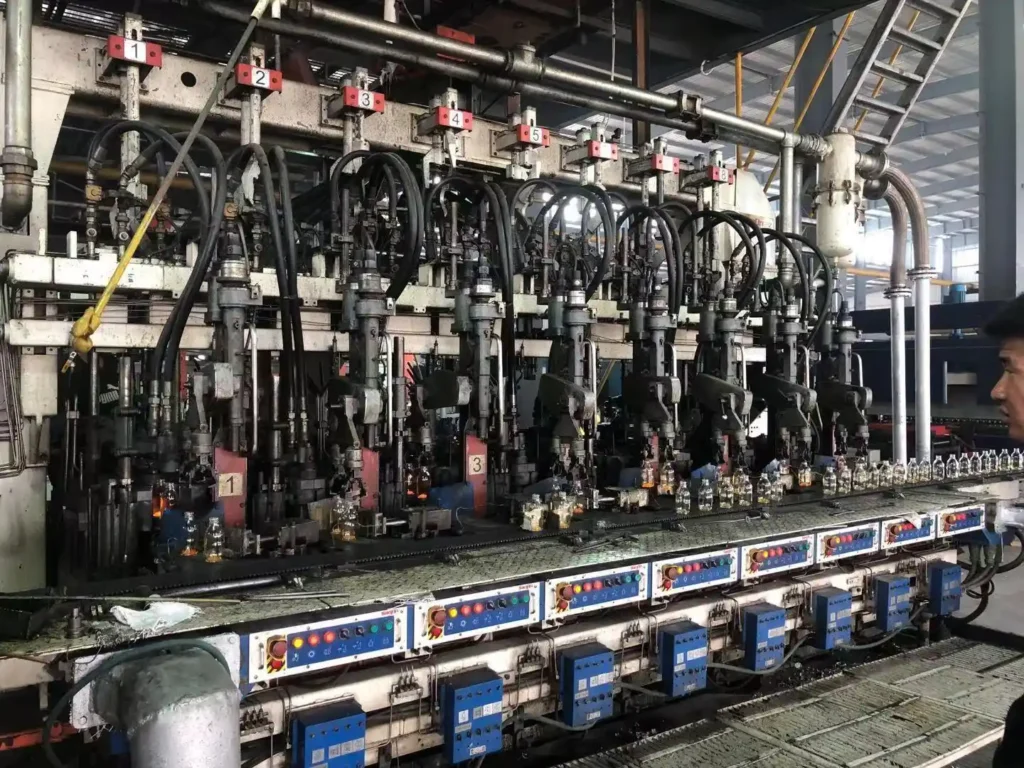
| Glass melting and forming | Furnaces and forming lines are brought down and restarted deliberately; restarting is a planned and costly operation. | Factories batch production to finish runs before the holiday. Late orders are refused rather than queued. |
| Annealing | Annealing lehrs run continuously and are not switched off on demand. | Annealing quality depends on consistent line conditions, which is why factories avoid inserting short, irregular runs in late December. |
| Decoration lines | Spray coating, silk screening, hot stamping and electroplating are the most capacity-constrained stages in November and December. | This is the bottleneck. A decorated order confirmed late will slip into March even if the glass itself is available. |
| Mould development | Mould shops close with the rest of the factory and take time to restart. | New mould projects confirmed after November 2026 are unlikely to produce before March. |
| Third-party inspection | Independent inspection companies suspend operations over the same holiday. | Complete any pre-shipment inspection before mid-January 2027, or plan for March onwards. |
| Trucking and container space | Trucking capacity tightens and rates rise as everyone ships at once in December and early January. | Book freight earlier than you would in a normal month; the final week before the holiday is unreliable. |
| Post-holiday workforce | Factory employment is drawn from internal migrant workers who travel home. A meaningful share do not return to the same factory. | The first batches after the restart carry more defect risk. Allow additional inspection on the first post-holiday run. |
How to plan a glass packaging order around Chinese New Year
Seven steps, in the order that matters:
- Fix your specification now, not in December. Jar or bottle dimensions, glass type, finish, decoration method, closure and packing all need to be locked before a factory can quote a slot against them.
- Work backwards from your sell-through date, not from the holiday. Start with the date stock must be on your shelf, subtract freight transit, subtract the holiday buffer, then subtract production time.
- Approve samples before the cut-off, not on it. Sampling adds one to two weeks plus courier time. A sample approved in December is a production slot that no longer exists.
- Prioritise decorated orders. Plain stock can be dispatched in 7–10 days in a normal month. Decoration is the stage that runs out of capacity first, so confirm decorated work earliest.
- Split the order if the schedule demands it. Shipping part of the quantity before the holiday and the balance in March is usually better than missing a retail window entirely.
- Confirm the individual factory’s own holiday dates. Official dates are set nationally, but every factory closes and reopens on its own schedule. Get the restart date in writing.
- Build a buffer for the first post-holiday batch. Plan for additional inspection and slightly longer lead times on anything produced in late February or March.
Finally, size the order honestly against container capacity. A 20ft container holds anywhere from 19,000 to 128,000 candle jars depending on jar size, and for many mid-size jars a 40ft high-cube is capped by weight before it is capped by space — the per-size loading table is in our container loading guide. Knowing your carton count per container makes the production slots in the table above far easier to book.
How Daystar Glassware plans around the holiday
Because our production schedule in Shenzhen is our own to manage, the calendar above is something we plan against rather than discover in January.
- Pre-holiday scheduling. We confirm production slots in advance and tell customers the latest ship date available for their project, instead of leaving it to a December conversation.
- Inspection at key production stages. Work is inspected during production and before packing, so quality issues are found on the line rather than at the destination. Test reports are available on request.
- Attention on the first post-holiday runs. First batches after the restart are treated as a restart, not as routine production.
- Standards held through the period. Products are manufactured to ASTM and FDA standards regardless of schedule pressure. We do not trade specification for speed in December.
Our standard terms — minimum order quantity, lead times, decoration options and pricing structure — are set out in our wholesale and bulk glass packaging overview and the wholesale and bulk buyer’s guide. If you are developing a new shape, colour or finish, see custom glass packaging.
If you are already late
If it is already January when you read this, most of the production calendar above has closed. Four options remain, in the order we would recommend them:
- Buy stock and drop the decoration. Undecorated stock jars and bottles stay available at 7–10 days for far longer than decorated work. Labels, sleeves or a different closure can carry branding without using a decoration line.
- Check whether an existing mould matches your design. Using an existing mould avoids mould development entirely and shortens the schedule substantially.
- Split the shipment. Take whatever is available before the holiday and place the balance for March.
- Air freight a limited quantity. Air freight is uneconomical for glass at volume, but a small quantity to protect a launch date can be justified. Discuss it with us before assuming it is impossible — the constraint is usually weight, not availability.
Frequently Asked Questions
When is Chinese New Year 2027 and how long do Chinese glass factories close?
Chinese New Year 2027 falls on Saturday 6 February 2027, with the official public holiday running around 4–12 February. The operational shutdown is much longer: factories begin losing staff and stop taking new production from mid-January, and do not return to full capacity until early-to-mid March. Plan against a six-to-eight-week window rather than the eight official days.
When should I place my glass packaging order to avoid Chinese New Year delays?
Work backwards from the date you need the goods. For decorated stock orders, confirm by early December 2026. For orders using an existing mould without stock on hand, confirm by mid-to-late November 2026. New mould projects should be confirmed in November 2026 or earlier. If you are unsure, send us your target delivery date and we will confirm the latest production slot available.
Can I still get stock glass jars and bottles during Chinese New Year?
Stock can be dispatched in 7–10 days in the period before the holiday, but availability narrows as other buyers draw down the same inventory, and trucking and container space are tightest in the final weeks. Anything requiring decoration, a new mould or a non-standard finish will not be produced until after the restart.
Does Chinese New Year affect quality inspection and shipping?
Yes, on both counts. Independent third-party inspection companies close for the same holiday, so pre-shipment inspection should be completed before mid-January 2027 or scheduled from March. On the shipping side, trucking capacity tightens and freight rates rise as everyone tries to load before the holiday, and container space in the final week is unreliable.
What is the latest date to confirm a custom mould order before Chinese New Year?
Mould development plus production needs the longest runway of any order type, so we recommend confirming custom mould orders by November 2026 to have a realistic chance of shipping before the shutdown. Mould shops close with the rest of the factory, so an order confirmed after that point is generally produced from March onwards.
Is Chinese New Year 2027 earlier than in 2026?
Yes. Chinese New Year follows the lunar calendar: it fell on 17 February in 2026 and falls on 6 February in 2027, eleven days earlier. That shifts every upstream deadline back by the same amount and pushes the mid-January production stop into the fortnight when most Western buying teams are still returning from their own New Year break.
Planning a glass packaging order around Chinese New Year 2027? Send us your jar or bottle specification, target quantity and required delivery date, and we will confirm the production slot and latest ship date available for your project. Request a free quote or browse our glass packaging catalogue.
Last updated: October 2026